Rigid Program? Broken Program
TLDR: A flexible workout program helps navigate around injuries, equipment availability and allows one to inject novelty if/when things get stale. A rigid program fails at each of those. This article talks about the knobs and dials that are easily accessible to the user in a good workout program.
You sprained your wrist playing basketball last weekend. The plan says Overhead Press but your wrist disagrees. Now what, throw out the whole program? Same story when the squat rack is taken, or when you're traveling and have nothing but dumbbells, or when your gym closes down and the new one doesn't have a cable machine.
A good program bends around these situations. You should be able to swap what needs swapping without the rest falling apart. Who doesn't like flexibility in their own workout schedule? Life imposes calendars on us all. The least we can ask for in a sweaty undertaking we signed up for is some wiggle room.
Start Somewhere, Tweak to Your Liking
You've been running Flat Barbell Bench Press with a 'Heavy' rep-scheme for weeks and it clicked. What's stopping you from trying the same rep-scheme on your Barbell Row? After all, exercise and rep-scheme are independent choices. Most setups fuse them without any good reason. If anything, experimenting with different stimulus profiles across exercises is how you figure out what works for your body.
And how about swapping Barbell Row for a (A) Dumbbell, (B) Machine or (C) Cable Row - without disrupting the rest of your program? In the end, it's still a Horizontal Pull (roughly the same primary target muscles). Your growth within an exercise carries over to the entire Movement Pattern. A variant swap shouldn't feel like starting over. At least not for long. Your workout programmer should ask you to test the new variant when it doesn't have enough data, and then pick up right where you left off.
How many days you train, which Movement Patterns go where — that should be yours to reshape without unraveling the rest. These are really just separate decisions.

Rigidity breaks. Flexibility builds.
Three Independent Layers
Every Jackked workout program is built from three independent layers:
Layer A: Which Movement Patterns fill your week
Your weekly template sets Movement Patterns per day. A Movement Pattern is, roughly speaking, a group of very related exercises. Barbell Bench Press vs Dumbbells vs Machine press — they all train the 'Horizontal Push' Movement Pattern.
Here's a typical 3-day Full Body program setup:
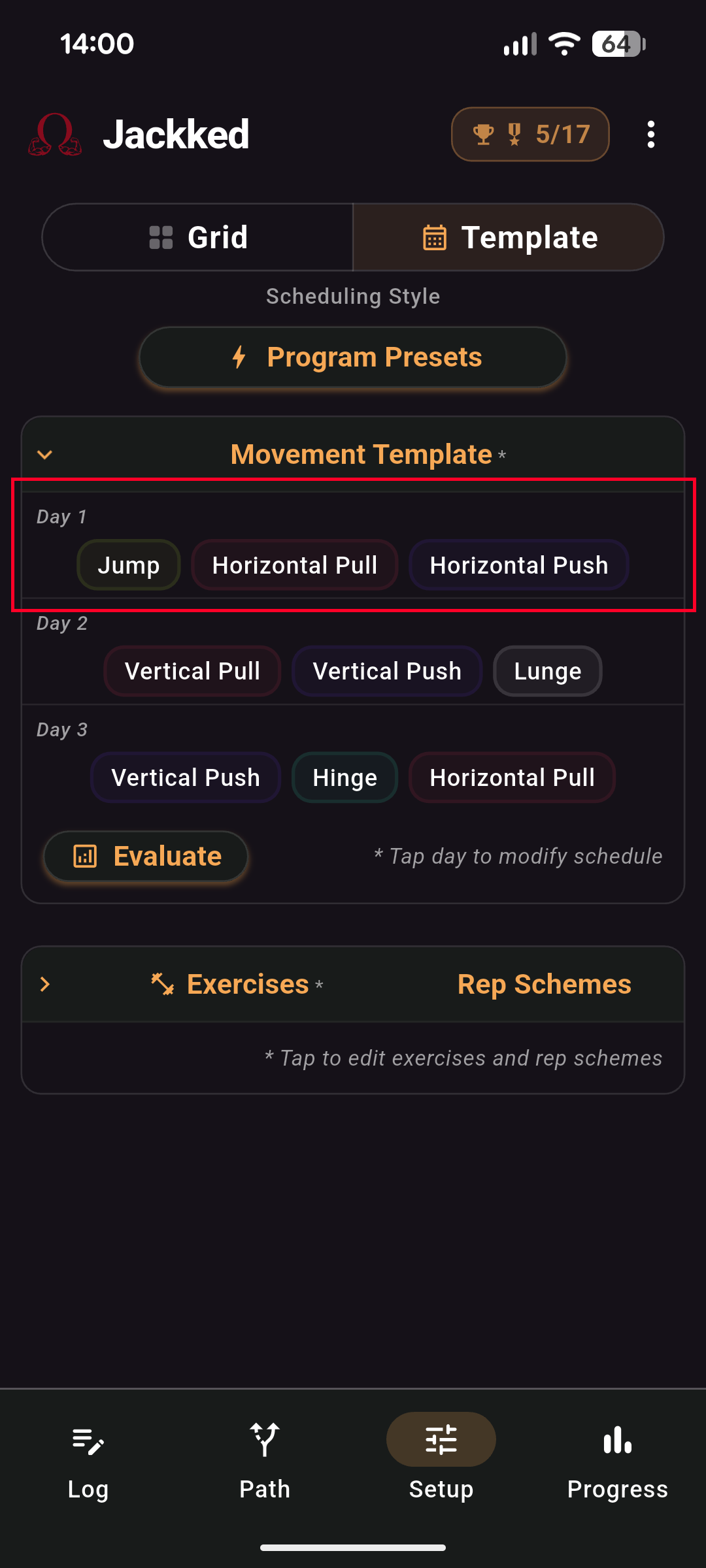
Template, Day 1
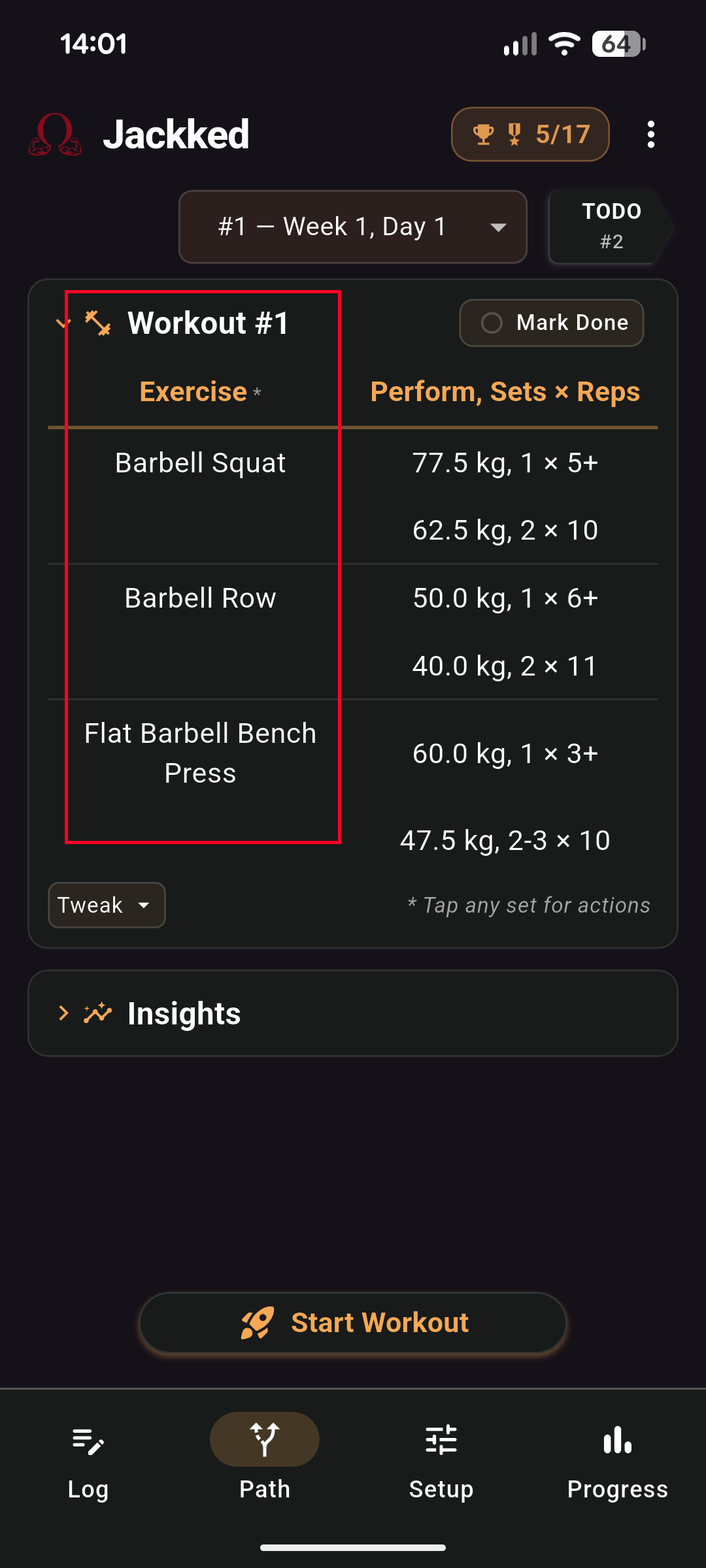
Workout #1
Layer B: Which exercises execute those patterns
Under each pattern, you pick which exercises fill that slot. Jump could be Barbell Squat, Front Squat, or Goblet Squat — switch whenever.
In the Day 1 example above:
- Jump → Barbell Squat
- Horizontal Pull → Barbell Row
- Horizontal Push → Flat Barbell Bench Press
Layer C: How you train each one
Each exercise is independently paired with any rep scheme. Want Barbell Squat on Moderate and Front Squat on Heavy? Done.
Adjust any one of these without the other two flinching.
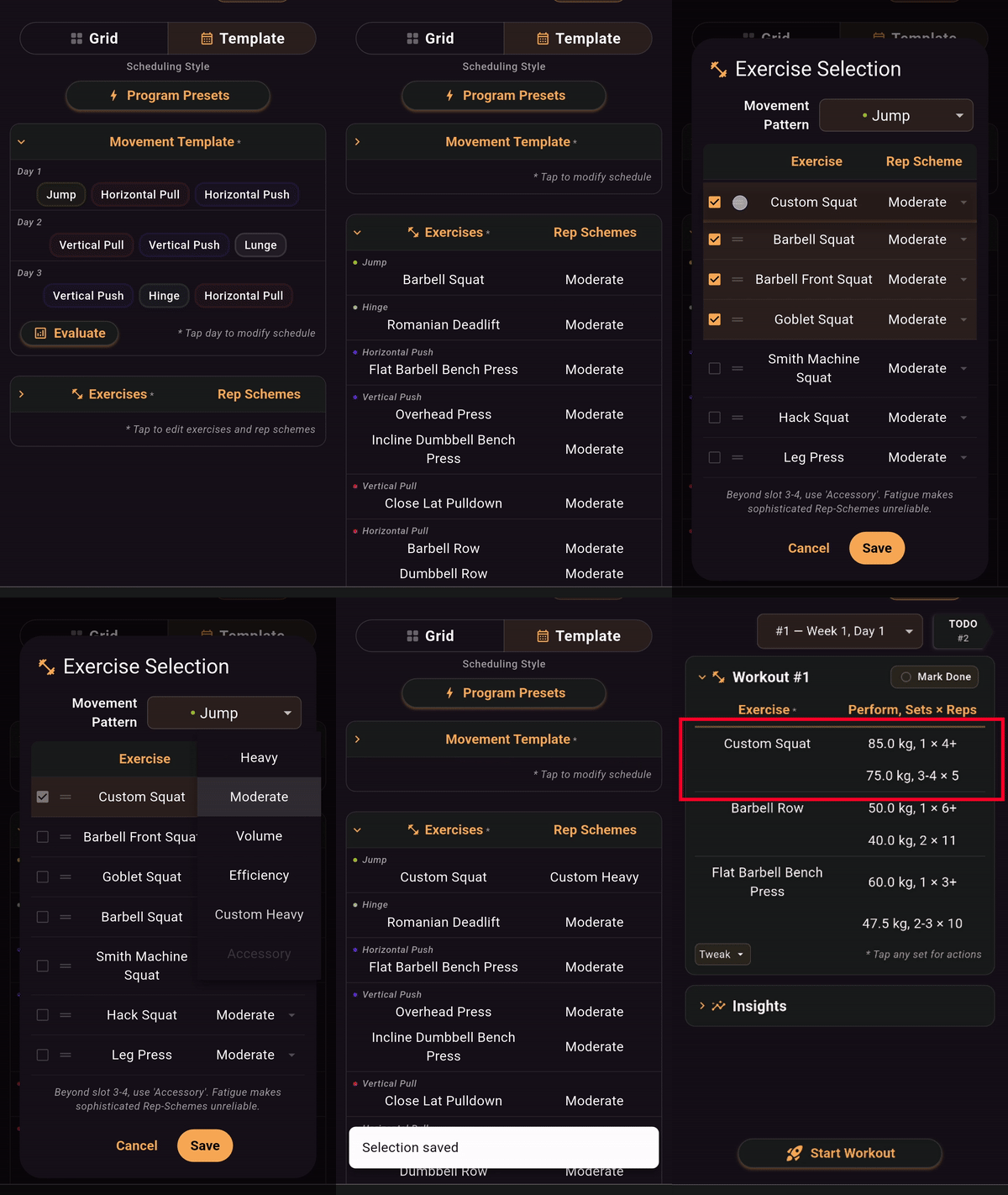
Swapping a custom exercise and rep scheme — the workout updates instantly.
You can also create a custom exercise or a custom rep scheme and it plugs into the same system — the engine treats it no differently from the built-in library. For more on choosing the right exercises for your goals, read this.