Your Workout Rewrites Itself
We can pinpoint the timings and positions of solar eclipses thousands of years into the future but struggle with predicting tomorrow's weather. How is this possible? More importantly, is muscle-building highly predictable like an eclipse, or a chaotic guessing game like the weather? The answer lies in the limits to how we model reality. The more accurate our model, the more accurate the predictions. With repeated experiments and expanding data, we can add layers and nuance to our understanding. Think of a phenomenon that repeats itself over and over. But we do not yet understand the exact math behind it. At first, our guess is basic — just a straight line. As data improves, we refine the model—adding curves, inflection points, and nuance. With every new step, the model gets closer to the truth.
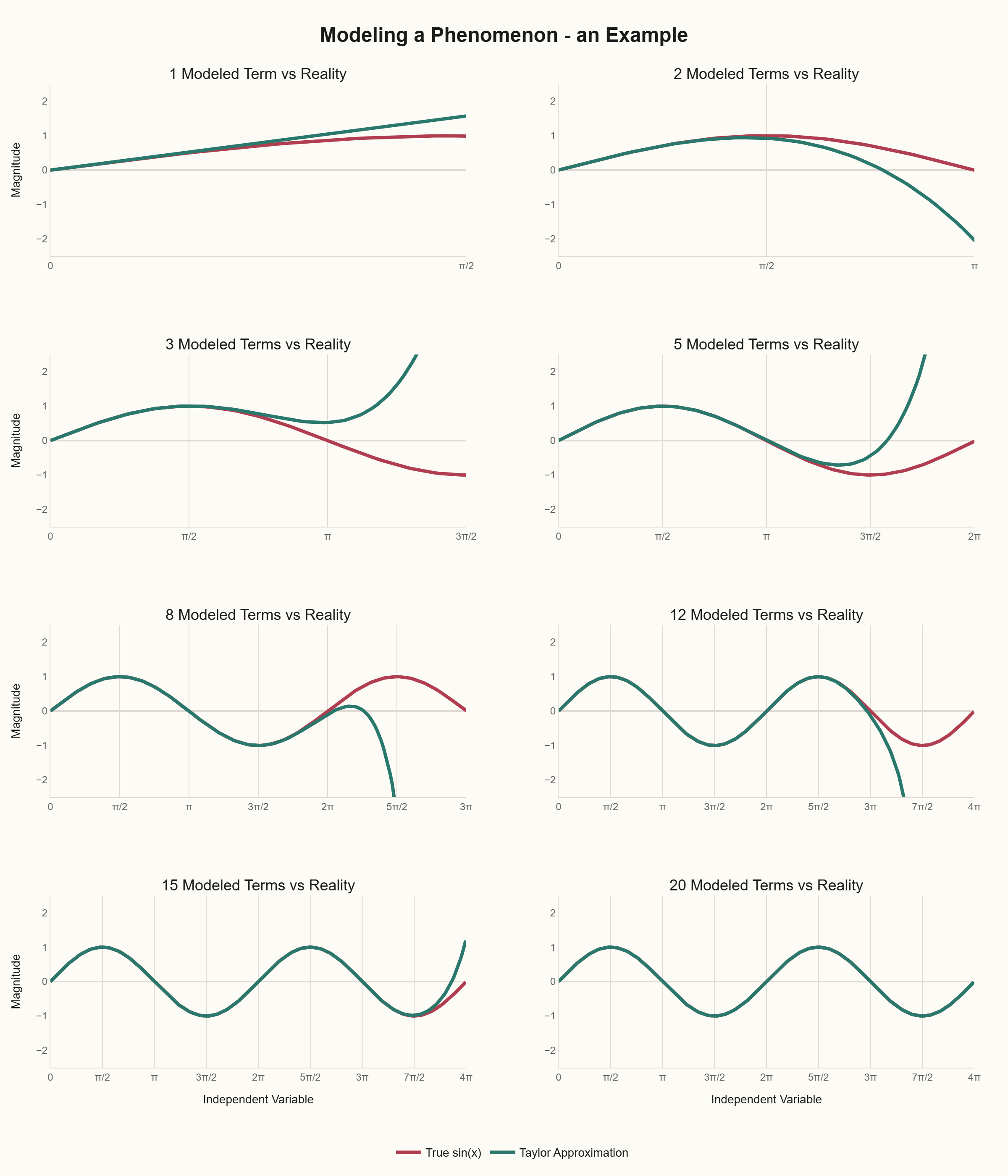
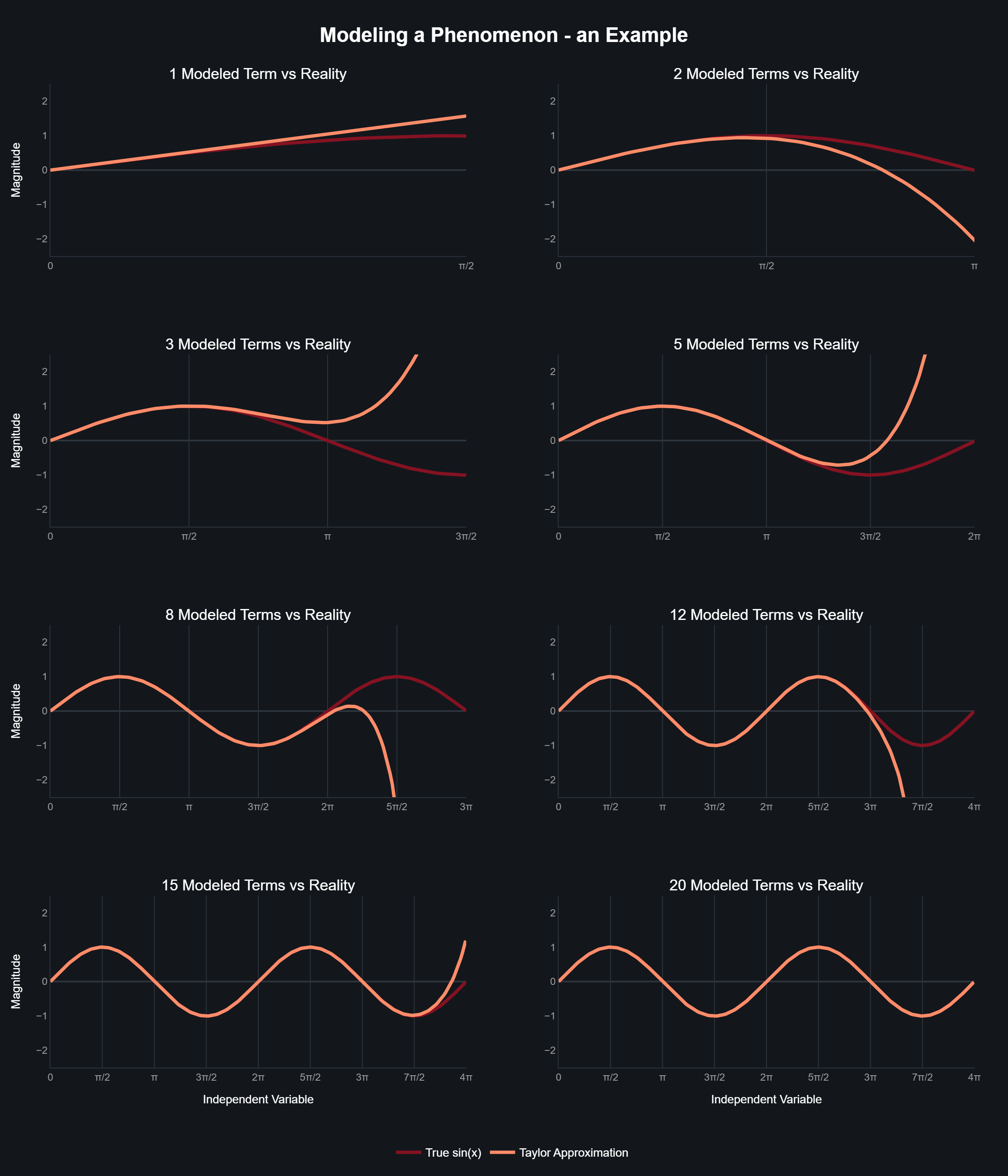
Something surprising is that just a few iterations get you most of the way there. Just like predicting an eclipse, the value of adding more complexity diminishes incredibly fast. This is in contrast with something like the weather. In such cases, it feels like there's always a significant 'last minute factor' to account for. So some systems are predictable - gravity, tidal patterns. Some are chaotic - markets, immune responses. The real question is, where does lifting weights fall on this spectrum? If you look at the lifting community, you'll see both schools of thought. On one extreme, they say if you do not know exactly what you'd be doing BEFORE stepping into the gym, you're not serious. On the other end, we see elite lifters who start with a top single, a test, to evaluate how "good" their day is and then scale their workout up/down accordingly.
Before we talk about who is right, let's summarize what we know about lifting for strength and muscle gain with varying degrees of nuance: The more we analyze what we know, the more we realize this game is far more stable than chaotic. Meaning the first few orders matter far more than the ones that follow. No matter how much complexity you add, they always form sub-components of the fundamentals - Stimulus and Recovery.
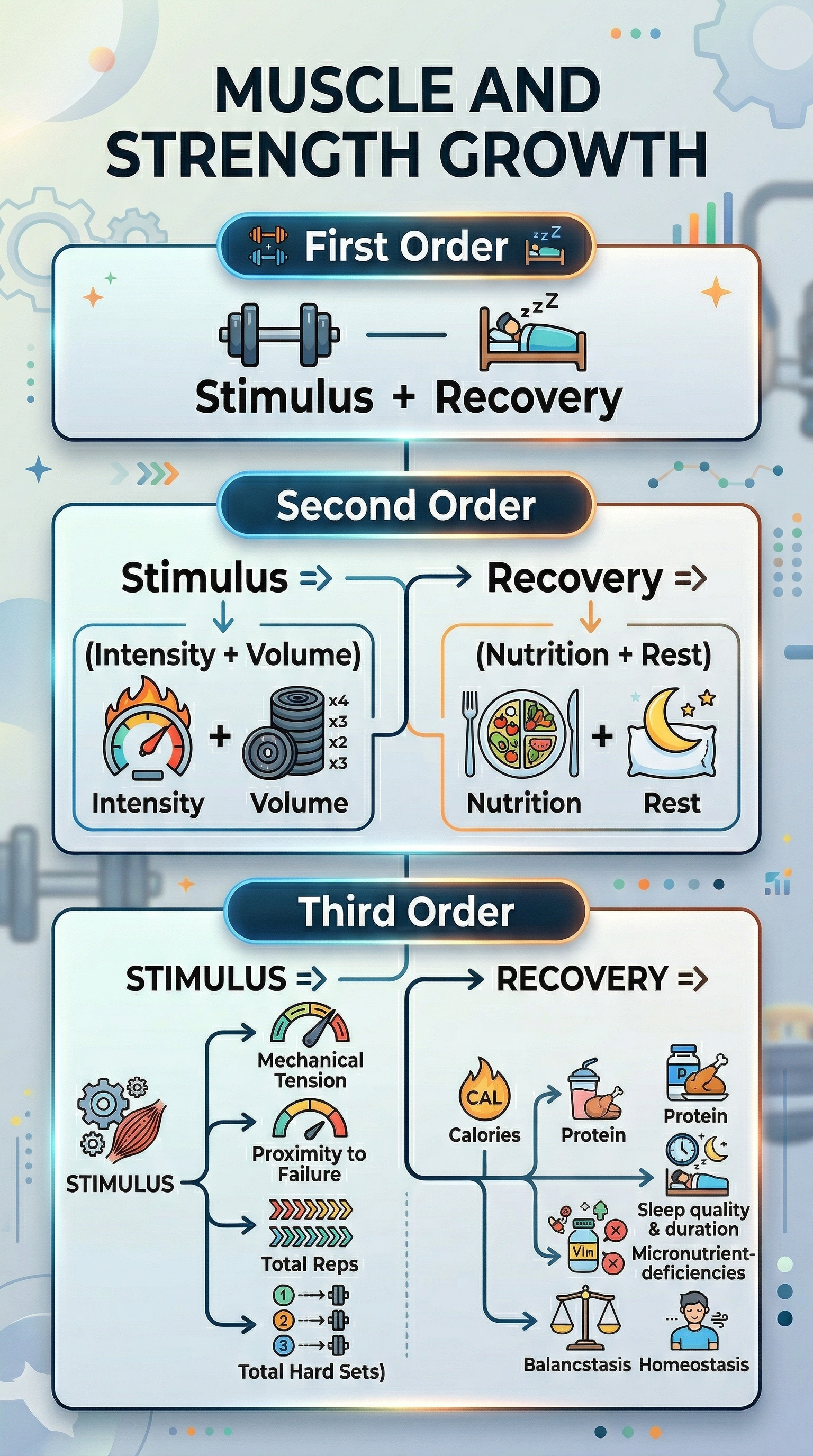
The lifter who is autoregulating today's session with a top single is playing a higher order game - a necessary correction because they nailed their basics so well that they're now starting to see unexplained gaps - like unexpected fatigue accumulated over the last few sessions despite playing by the book. For most lifters, there's still so much untapped potential. A beginner whose body is craving stimulus might do themselves a disservice by skipping the plan and auto-regulating too early. Similarly, an intermediate lifter might be exposed to unnecessary risks by copying their powerlifter idol in their peaking program without building the baseline work capacity. Copying another lifter is almost never the answer.
Going back to the original debate about pre-calculating exactly what to do VS deciding on the fly, the answer is: it depends on the level of advancement of the lifter. A beginner probably needs something more prescriptive - an almost deterministic path. Whereas an advanced lifter may need something more nuanced - which to a beginner might seem like a step backward. Acknowledging where you stand and then resorting to the basics almost always is the right move. Helping you navigate those layers of complexity is exactly why I built Jackked. It emphasizes the most important factors that drive progress.
The first-order terms are straightforward: pick the right balance of movement patterns instead of worrying about exercise selection. This frees you from any concerns about getting the right KIND of stimulus. 80% of your plan is already in place with just this move.
Designing a custom training split by prioritizing broad movement patterns instead of micro-managing exercises.
Then choose a rep scheme that nails your target volume, intensity and proximity to failure. That is how you get the right AMOUNT of stimulus. If you're not feeling it today, you can choose a 'Light' or 'Deload' day without any disruption: maintaining the momentum rather than fretting over missed perfection.
Linking an overarching rep progression scheme to mathematically dictate the volume and required stimulus.
When fatigue peaks, an automatic shift to 'Light' mode scales intensities instantly to keep your momentum going.
The app goes as deep as you want it to, but it arranges the complexity so the factors that actually drive progress are always front and center. If this way of thinking resonates with you, for a single/lifetime purchase — no subscriptions, no recurring fees — you can get Jackked on the Play Store or the App Store right now.